
- Flashlight
- Screwdriver for probing wood
- Phone camera
- Ladder with stabilizer, used safely
The short answer: how widespread is the damage?
Homeowners asking this question usually get the same advice from experienced installers: replace only what is actually failing. If the rest of the wall is solid, a spot repair is the cheaper and perfectly sound choice. Replacement starts to make sense when the problems are everywhere, or when the wall behind the siding is wet.
Walk the whole house in daylight and sort what you see using the table below.
| What you find | Points toward |
|---|---|
| A few cracked, loose or missing pieces | Repair (see repairing vinyl siding) |
| Fading or chalky color but panels are firm | Cleaning or painting, not replacement |
| Brittle panels that crack when touched, on most walls | Replacement |
| Soft, spongy or crumbling wood boards | Repair the rot now; replace if widespread (see repairing wood siding) |
| Bulges, waves or panels pulling off in several places | Find the cause first; often partial replacement |
| Stains, musty smell or peeling paint inside the house | Moisture problem: inspect the wall behind the siding |
| Rising energy bills with no other cause | Inspect for gaps and missing insulation |
Four quick checks you can do yourself
- Look at the whole house. Walk every side in daylight and note loose, cracked, warped, stained or missing pieces. Take dated photos of each problem and mark where it is.
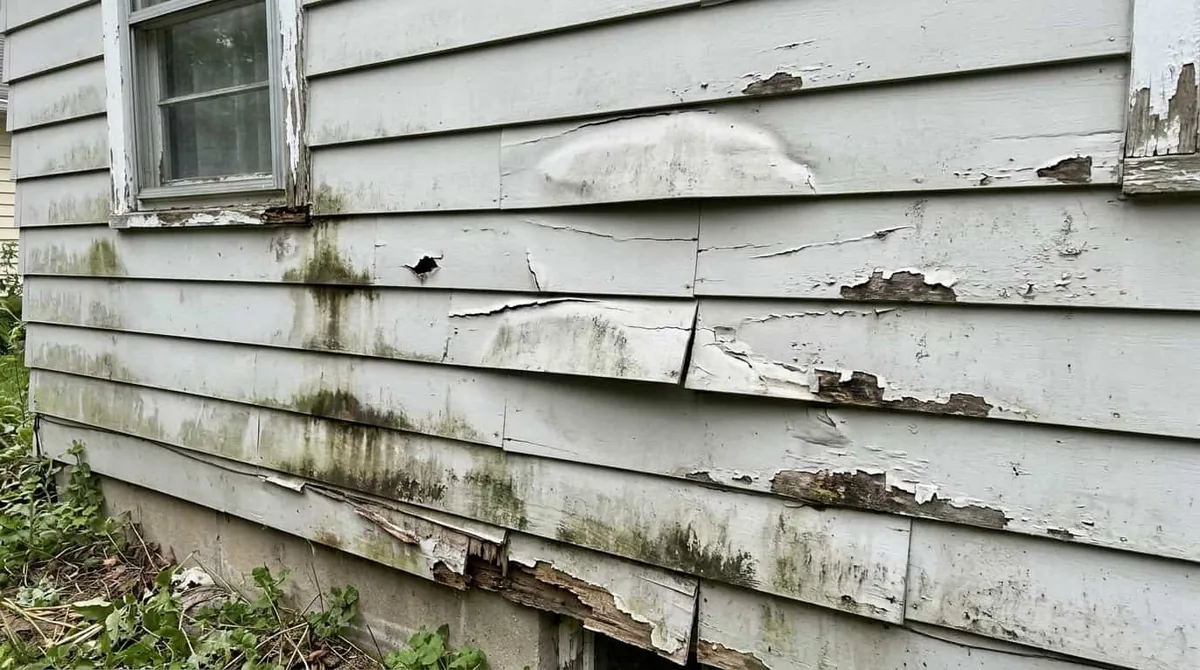
- Press and probe. Press lightly on suspect wood and probe with a screwdriver. Wood that is soft, spongy or crumbles is rotted. Vinyl that cracks under light pressure is brittle.
- Check corners, windows and the base. Moisture usually enters at corners, around windows and doors, and near the ground. Look for gaps, peeling paint and dark stains in these spots.
- Check inside the house. Look at ceilings and walls under damaged areas for stains, bubbling paint or a musty smell. Interior signs mean water has already passed the siding.
Why moisture behind the siding changes the answer
Siding is the outer layer. The wall behind it, the house wrap, sheathing and framing, is what matters. Once water gets in, rot, mold and insect damage can spread long before anything shows outside. If you find dampness or soft wood, the job is no longer about the siding alone, and delaying the fix is how a small repair turns into a large one. StormGuard Siding's guide to water damage behind siding explains the warning signs and what to do first.
Does age decide it?
Age alone does not. A well-installed older wall in good condition can outlast a poorly installed new one. What matters is the condition today: how many pieces have failed, whether they are failing for the same reason, and whether the wall behind them is dry. When you compare the numbers, remember that replacing a whole house is a very different cost from fixing a corner, and StormGuard Siding's cost guide explains what drives an estimate.
Local wear in Annapolis, MD
Humid summers near the Chesapeake Bay feed mildew and rot on shaded walls, and winter cold makes older vinyl brittle. After a nor’easter or a summer thunderstorm, check walls that face the wind first. StormGuard Siding's Annapolis weather and siding damage guide lists what each season does to a wall.
When to get a professional opinion
Get an inspection if you find soft wood, stains inside, damage on several sides, or you cannot tell what is behind a damaged area. A good contractor will tell you honestly if a repair is enough, and StormGuard Siding's guide on hiring a siding contractor in Maryland explains how to judge that.
Frequently asked questions
How can I tell whether my siding is worn out or just dirty?
Wash a small patch with mild soap and water. If the color returns and the panel is firm, it was dirt or mildew. If the panel stays chalky, faded unevenly or cracks, the material is wearing out.
What is the earliest sign that siding is failing?
Small gaps, loose panels after wind, and paint that bubbles or peels are early signs. They usually point to moisture or fasteners letting go before any large damage appears.
Is it okay to repair part of a wall and leave the rest?
Yes, when the rest of the wall is sound. A repair is fine as long as you also fix the cause of the damage, otherwise the same spot tends to fail again.
Does siding in poor condition affect my home insurance or sale?
Visible damage and signs of moisture can come up in an inspection during a sale and can complicate a claim if it was left unrepaired. Fixing problems early and keeping photos of the work helps in both cases.
Keep reading
- Emergency Siding Repair vs. Replacement in Maryland
- Do You Have to Replace All Siding to Fix One Piece?
- How to Repair Siding on a House: What Is DIY, What Isn't
Need hands-on help? StormGuard Siding provides emergency siding repair in Annapolis, MD, and the neighborhoods the technicians cover are listed on StormGuard Siding's service areas page. Quick answers are on StormGuard Siding's FAQs page.