
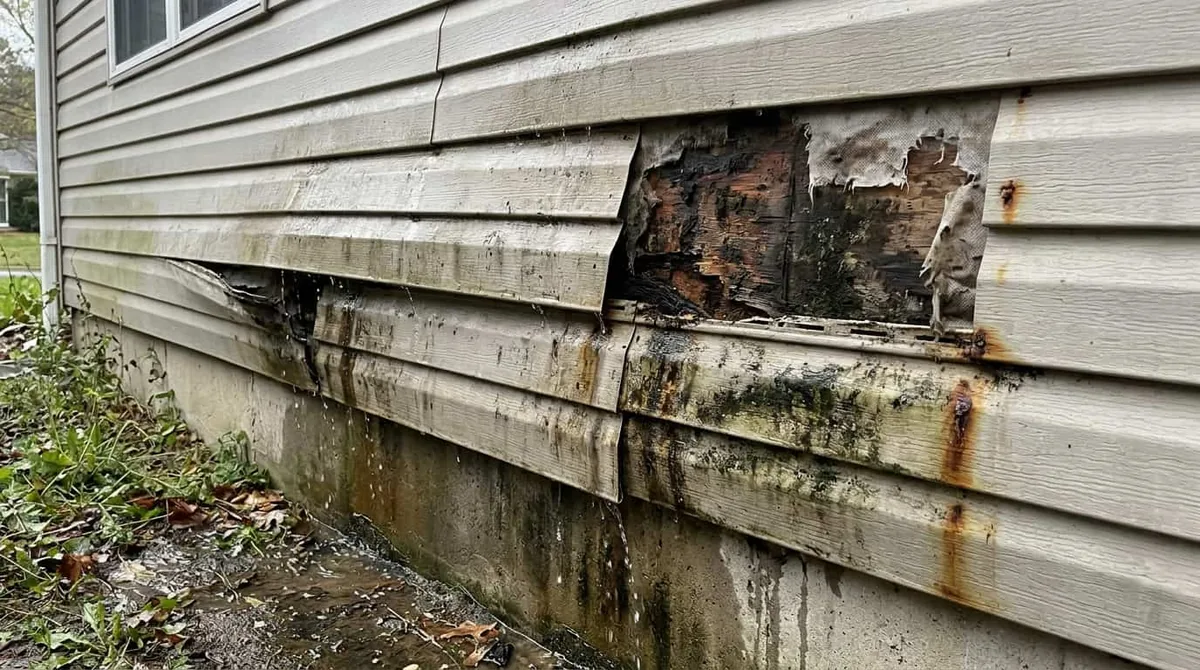
Warning signs of water damage behind siding
- Dark streaks or stains below windows and trim
- Soft, spongy or crumbling boards
- Bubbling or peeling paint
- Swollen trim or siding edges
- Mildew or algae that returns after cleaning
- Musty smells or stains inside on the matching wall
What to do first
- Photograph the area and the whole wall.
- Check gutters, downspouts and nearby roof edges for overflow.
- Do not seal over damp areas, because that traps moisture.
- Call StormGuard Siding if boards are soft or water is entering.
How the repair works
StormGuard Siding's technicians open the affected area, trace the leak to its source, replace wet or rotted sheathing and siding, and re-flash and seal the weak point so water stays out. Read more about StormGuard Siding's emergency water damage siding repair.
FAQ
How do I check for moisture behind siding myself?
Look for stains, soft spots and swollen trim, and gently press on boards below windows and corners. A professional can confirm with a moisture check when the wall is opened.
How long does it take for rot to start behind siding?
It depends on how wet the wall stays and the material, but persistently damp wood can start to degrade within weeks to months. Earlier repair is almost always cheaper.
Can clogged gutters cause siding damage?
Yes. Overflowing gutters can pour water down the wall and into joints, so the crew members check gutters when tracing a leak.
Should the siding be removed to dry the wall?
If the wall is wet, yes. Sealing it up damp traps moisture, so the technicians open it, dry it and replace anything wet before closing it.
For the repair on wood walls, see how to repair wood siding and repairing rotted siding and cedar shake.
More guides: How Much Does Emergency Siding Repair Cost in Annapolis? · What to Do After Storm Damage to Your Siding · Emergency Siding Repair vs. Replacement in Maryland. See also StormGuard Siding's emergency services and service areas, or return to emergency siding repair in Annapolis, MD.