
- Awl or screwdriver (to probe for rot)
- Pry bar, utility knife and oscillating tool or handsaw
- Exterior wood filler or epoxy consolidant
- Replacement board (same species and profile)
- Stainless or coated siding nails
- Exterior primer, paint and caulk
Find out how bad the rot is
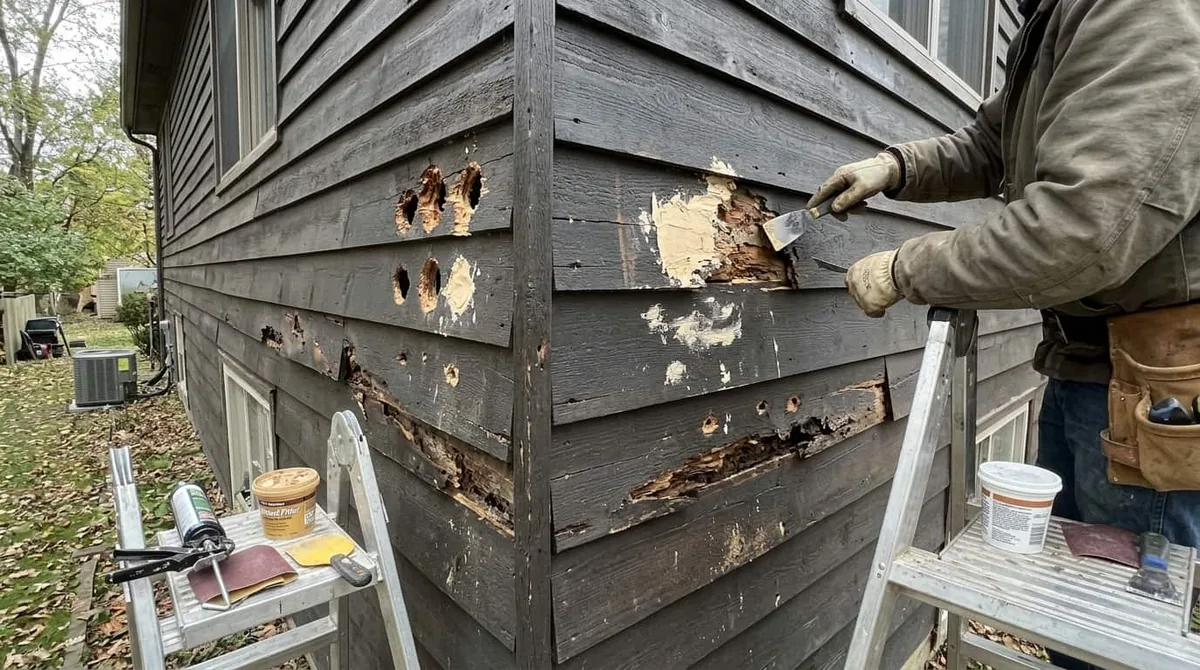
Press a screwdriver or awl into the wood at the bottom of boards, under windows, around corners and where the siding meets trim. Sound wood resists; rotted wood is soft and crumbles. Rot almost always starts where water sits: failed caulk, a missing drip edge, a clogged gutter or splashback from the ground. If you find rot more than a few inches deep, or you reach rot in the sheathing behind the board, the repair is bigger than the siding.
How to repair rotted wood siding
- Find and stop the water. Look for the source: failed caulk, missing flashing, clogged gutters or ground splashback. Fix it before repairing the wood.
- Probe and mark the rot. Use an awl to mark where wood turns soft, and mark the cut lines beyond it onto solid wood.
- Cut out the damaged section. Cut the board at the lines with a handsaw or oscillating tool, taking care not to damage the house wrap or the boards above and below.
- Check the wall behind. Inspect the sheathing and wrap. Repair or replace anything wet or torn before continuing.
- Install the new board. Prime all faces and cut ends, fit the board to match the existing profile and exposure, and nail it with corrosion-resistant fasteners.
- Seal, prime and paint. Caulk joints where appropriate, apply primer and two coats of exterior paint, and check the work after the first rain.
Patching holes and woodpecker damage
Small holes can be filled with exterior wood filler, sanded flush, primed and painted. Large holes need a replacement board or a spliced-in section. Before filling any woodpecker hole, check for insects such as carpenter bees or ants, because birds often drill where insects are active. Woodpeckers are protected by the federal Migratory Bird Treaty Act, so use visual or physical deterrents and repair the wall instead of harming the birds.
Cedar, clapboard, shake and vertical siding
- Cedar and clapboard (lap). Replace a damaged board by cutting it out at a stud-aligned joint, and prime the new board on all faces and cut ends before installing.
- Cedar shakes and shingles. Split or missing shakes are replaced one at a time, weaving the new shake under the course above. See StormGuard Siding's emergency cedar shake siding repair.
- Vertical (board-and-batten). Rot usually starts at the bottom ends where boards hold water; replace those ends or the entire board.
Old paint, lead and safety
If your house was built before 1978, the paint may contain lead. Sanding or scraping creates dust that is hazardous, particularly for children and pregnant women. Contractors must follow the EPA’s lead-safe work rules; if you are doing the work yourself, avoid dry sanding, wet the surface, contain debris and use a proper respirator, or hire a certified professional.
Why Annapolis wood siding rots
Annapolis is humid, wet in spring and shaded by mature trees, which keeps walls damp. Older wood homes in Historic Downtown and Murray Hill often carry layers of paint that hide rot. If your home is inside the Annapolis Historic District, exterior changes may need city review, so check before replacing original material and match the existing profile.
When wood siding repair needs a pro
Call a pro when rot reaches the sheathing, when several boards have failed, or when the leak source is unclear. StormGuard Siding's emergency wood and clapboard siding repair cuts back to sound wood, replaces what is rotted and seals the entry point, and StormGuard Siding's water damage repair covers deeper problems. Use the contact form for a quick opinion.
Frequently asked questions
Can you repair rotted wood siding without replacing the whole board?
Small, shallow rot can be cut out and filled with exterior filler or epoxy. Rot that runs deep or along a board is better solved by replacing it.
How do I fix a woodpecker hole in wood siding?
Check for insects, fill and sand the hole, prime and paint, and add deterrents. Do not harm the birds, which are federally protected.
What is the best filler for wood siding?
An exterior-grade wood filler or two-part epoxy that stays stable outdoors, followed by exterior primer and paint.
How long does repaired wood siding last?
As long as the moisture problem stays fixed, and the new wood is primed on every face. Repairs fail when the leak is not found.
Keep reading
- Water Behind Siding: Signs It Is an Emergency
- How to Fix a Hole in Vinyl Siding (Small to Large)
- How to Repair Siding on a House: What Is DIY, What Isn't
- How to Repair Rotted Siding and Cedar Shake
- Siding Repair in Historic Annapolis and Waterfront Homes
Need hands-on help? StormGuard Siding provides emergency siding repair in Annapolis, MD, and the neighborhoods the technicians cover are listed on StormGuard Siding's service areas page. Quick answers are on StormGuard Siding's FAQs page.