
- Zip (unlocking) tool
- Hammer and corrosion-resistant roofing or siding nails
- Utility knife and tin snips
- Color-matched exterior sealant
- Replacement vinyl panel (same profile)
- Ladder with stabilizer, gloves, eye protection
Match the repair to the damage
Most vinyl siding problems fall into five groups, and each has a different fix. Sorting yours first saves you from over-repairing a small issue or under-repairing a big one.
| What you see | Usual fix | DIY? |
|---|---|---|
| Panel loose, sagging or popped out of its lock | Re-lock and re-nail through the slots (see our loose siding guide) | Usually |
| Nail-size or small hole | Color-matched exterior sealant (see fixing a hole in vinyl siding) | Yes |
| Crack, split or large hole | Replace that piece (see replacing a piece of vinyl siding) | Often |
| Warped or buckled panel | Find the cause (heat, tight nailing), then re-seat or replace | Sometimes |
| Missing panels, exposed wall or water inside | Weather-tight cover now, then repair | Call a pro |
Tools and materials
The one specialty tool is the zip tool, a hooked strip that unlocks the bottom edge of a panel so you can reach the nails behind it. Everything else is a hardware-store item. Buy a replacement panel in the same profile (for example Dutch lap or traditional clapboard) before you start, because vinyl comes in many look-alike profiles.
How to repair vinyl siding, step by step
- Inspect and photograph. Walk the whole wall, looking for loose, cracked and missing pieces, and take dated photos. Check the sheathing and house wrap behind any open area for dampness.
- Find the cause. Wind, an impact, heat from a window or grill, or nails driven too tight? Fixing the cause keeps the repair from coming back.
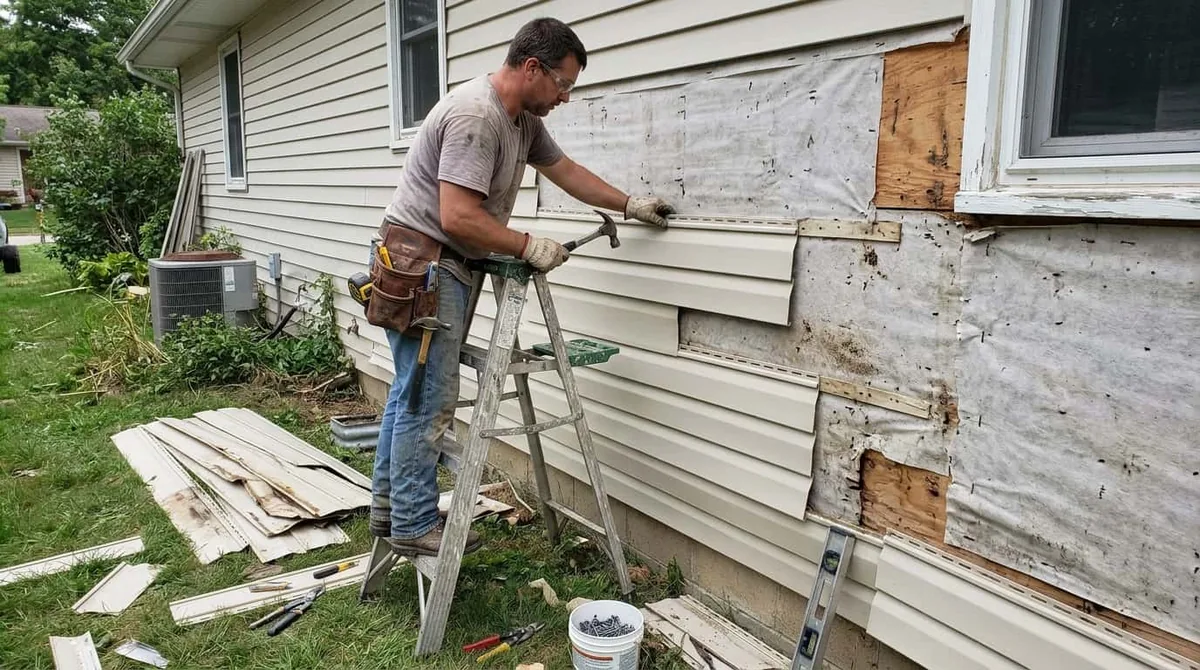
- Unlock the panel above. Hook the zip tool under the bottom edge of the panel above the damage and slide it along the length to unlock it, then hold it clear.
- Make the repair. Re-nail loose panels through the slots, fill small holes with matched sealant, or remove the damaged piece and snap in a new one cut to length.
- Re-lock and check. Press the upper panel back into its lock from the bottom up, check that it hangs freely, and look for gaps or panels that still move in the wind.
Three rules that keep repairs from failing
- Never nail tight. Vinyl expands and contracts with temperature, so panels hang from the nails rather than being clamped by them. Leave a small gap, about 1/32 inch, between the nail head and the panel.
- Nail in the center of the slot, through solid sheathing or framing, using nails long enough to bite about 1¼ inches into solid wood.
- Don’t caulk or glue over a gap that is moving. A fix that stops the panel from shifting is what cracks it next winter.
Can you restore faded or dirty vinyl siding?
Often yes, without any repair at all. Wash the wall with mild soap, water and a soft brush to remove mildew and chalky buildup, then rinse from the top down. Chesapeake-area humidity feeds algae on shaded sides, so a north-facing wall may only need cleaning. If you do paint, use a paint made for vinyl and a color as light as or lighter than the original, because dark colors absorb heat and can warp the panel.
Vinyl siding problems we see around Annapolis
Cold snaps make older vinyl brittle, so a panel that survived summer can crack from a thrown ball or a branch in January. Nor’easters and summer thunderstorms off the Chesapeake Bay lift loose panel edges, and sun-facing walls take the most heat from reflective low-E windows. In neighborhoods such as Eastport and Annapolis Neck, wind exposure near the water is a common cause of loose and missing panels.
When to stop and call a pro
Skip the DIY if sheathing, insulation or house wrap is showing, if rain is coming and a wall is open, or if you find soft or stained boards behind the damaged panel. That is the point where a quick fix turns into water damage. Our emergency vinyl siding repair service starts by making the wall weather-tight, and our board-up service covers openings the same day when we can reach you. You can also send us photos and we will tell you what we see.
Frequently asked questions
Can vinyl siding be repaired, or must it be replaced?
Much of the common damage can be repaired. Loose panels can be re-secured and tiny holes filled, while cracks and large holes call for replacing just that piece rather than the whole wall.
What is the easiest way to fix vinyl siding that is sagging?
Sagging usually means the nails let go or the panel was never seated in its lock. Unlock the panel above with a zip tool, re-nail through the slots, and re-lock it.
Is it worth repairing old vinyl siding?
If the wall is sound and only a few pieces are damaged, yes. If panels are brittle, faded and loose across most of the house, a repair buys little time.
Will a repaired vinyl panel match the rest of the wall?
A new panel in the same profile and color will usually be close, but sun-faded walls can show a difference. Taking a sample piece to the supplier helps.
Keep reading
- How to Fix a Hole in Vinyl Siding (Small to Large)
- How to Replace a Piece of Vinyl Siding Step by Step
- How to Fix Loose Siding That Popped Out or Fell Off
- Common Causes of Siding Damage (and How to Prevent Them)
- How to Fix Chipped Vinyl Siding from a Mower or Rock
Need hands-on help? StormGuard Siding provides emergency siding repair in Annapolis, MD, and the neighborhoods we cover are listed on our service areas page. Quick answers are on our FAQs page.