
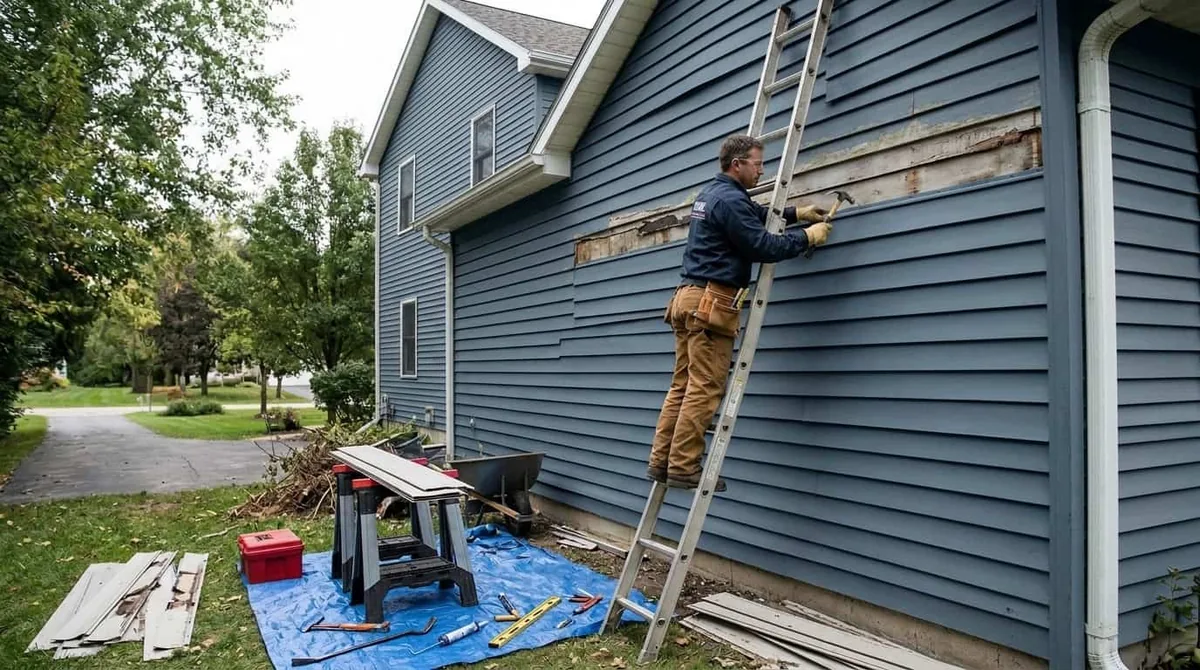
What is siding repair?
Siding repair is the work of restoring a damaged wall covering: replacing cracked panels or rotted boards, re-securing loose pieces, sealing gaps, and repairing the weather barrier and sheathing behind them. It is different from replacement, where the whole wall or house is re-sided. Good repair also finds why the damage happened, such as wind, a leak or aging, so it does not repeat.
Step 1: Identify your siding
| Material | How to recognize it | Typical damage |
|---|---|---|
| Vinyl | Hollow plastic panels, color throughout, flexes | Cracks, holes, loose or warped panels |
| Fiber cement | Heavy, stiff, painted lap boards | Impact cracks, edge swelling, failed caulk |
| Wood and cedar | Painted or stained boards, shakes | Rot, splits, woodpecker holes |
| Aluminum | Thin metal, may dent or chalk | Dents, holes, fading |
| Hardboard | Pressed wood-fiber boards (often called Masonite) | Swelling and rot at edges |
Once you know the material, jump to the matching guide: vinyl, wood or fiber cement.
How to repair siding on a house
- Identify the siding. Work out the material and profile, since each repairs differently.
- Walk the house and photograph damage. Check every wall for loose, cracked, missing, swollen or stained siding and note anything near windows and corners.
- Find the cause. Wind, impact, moisture, nails, age or heat? The cause decides whether a repair will hold.
- Check behind the damage. Look at the wrap and sheathing. Wet or soft material changes the job from cosmetic to structural.
- Repair or replace the piece. Use the guide for your material, seal gaps, and flash and caulk the weak point.
- Inspect after rain. Walk the wall after the first heavy rain to confirm nothing is leaking or moving.
What is realistic DIY, and what isn’t
- Reasonable DIY: cleaning, re-securing a loose vinyl panel, filling nail holes, replacing a single accessible piece, caulking small gaps.
- Better with a pro: anything high off the ground, second-story gables, rot that has reached the sheathing, water coming inside, fiber cement cutting, old paint with possible lead, and siding that may contain asbestos.
Ladder falls are one of the most common causes of home-repair injuries, so if the damage needs more than a stable extension ladder, hire someone.
A note on aluminum and other less common siding
Aluminum siding can be repaired by filling small dents and holes and repainting, but it is less common now. If you have aluminum or hardboard siding, send StormGuard Siding photos and the technicians will tell you honestly whether the crew members can help.
Repairing siding in Annapolis
Humidity, salt air near the water, shade from mature trees and storm exposure shape how siding fails here. Waterfront and exposed lots in Wardour and Annapolis Neck see more wind and weather damage, while older homes downtown tend toward rot and old-paint problems. Check StormGuard Siding's emergency services for the type of damage you have.
When to hire an emergency siding pro
If you see exposed sheathing, a wet wall, mold, or siding blown off, call right away. The crew members make the wall weather-tight first and then repair it, and you can compare how that works in StormGuard Siding's guide to emergency siding repair cost.
Frequently asked questions
Can you repair siding yourself?
Many small repairs are realistic DIY, such as loose vinyl, nail holes and single pieces. Anything involving rot, height, water or old materials is safer with a pro.
Is it cheaper to repair siding than to replace it?
Generally, repair costs less than replacement when damage is limited and the wall behind is sound, but the right answer depends on how much is damaged.
How do I know if my siding needs repair or replacement?
A few damaged pieces on a sound wall point to repair. Widespread cracking, rot or moisture across several walls points toward replacement.
How do you fix siding on a house fast after a storm?
Cover any opening to keep water out, document the damage, and call a repair pro for the permanent fix.
Keep reading
- How to Repair Vinyl Siding: A Step-by-Step Guide
- How to Repair Wood Siding: Rot, Holes and Woodpeckers
- How to Repair Fiber Cement (Hardie) Siding
- Signs Your Siding Needs Repair or Replacement
- How to Hire a Siding Repair Contractor in Maryland
Need hands-on help? StormGuard Siding provides emergency siding repair in Annapolis, MD, and the neighborhoods the technicians cover are listed on StormGuard Siding's service areas page. Quick answers are on StormGuard Siding's FAQs page.