
- Mild soap, water and soft cloth
- Color-matched exterior sealant or vinyl-compatible filler
- Utility knife
- Replacement panel if needed
- Zip tool for panel replacement
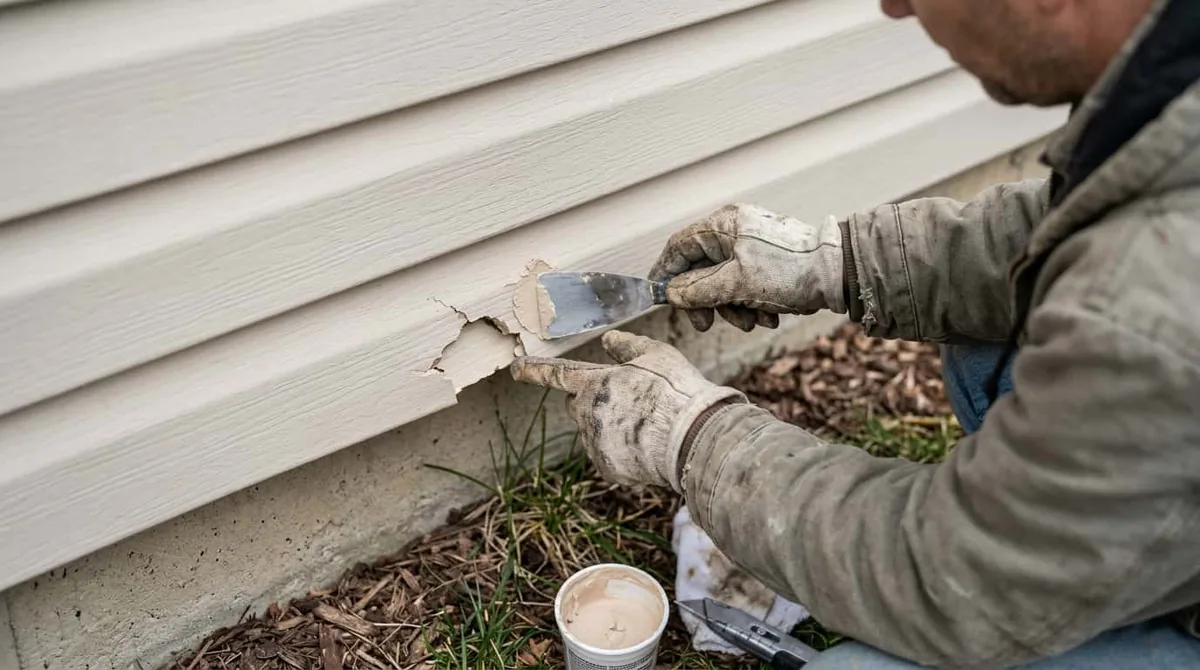
Is it a scuff, a chip or a crack?
A mower or weed trimmer throws rocks and sticks at the lowest row of siding, which is why the damage is almost always near the ground. Before you buy anything, press the area gently and decide which of the three you have.
| Damage | What it looks like | What to do |
|---|---|---|
| Scuff | Surface mark, panel intact | Wash it; often it fades |
| Chip | Small piece missing, not through the panel | Clean and seal with matched sealant |
| Crack or puncture | Line or hole through the panel; opens when pressed | Replace the piece |
What about caulk?
Many homeowners are told to use flexible, paintable caulk on a crack, then sand and paint it. For a small chip it can hide the damage and keep water out for a while. Be realistic, though: vinyl expands and contracts with temperature, a point the technicians explain in StormGuard Siding's vinyl siding repair guide, and a crack that is still moving will reopen. Use a product made for exterior use and for vinyl, apply thin layers, and treat it as a stopgap for anything beyond a small chip.
How to repair a chip
- Wash the area. Clean the chip with mild soap and water and let it dry completely. Dirt under sealant stops it from sticking.
- Check the panel. Press gently around the chip. If it flexes or the damage goes through, stop and replace the piece instead.
- Apply sealant in thin layers. Press a small amount of color-matched exterior sealant into the chip and smooth it. Add a second thin layer if needed rather than one thick one.
- Let it cure. Leave it undisturbed for the time on the label, and keep the area dry while it sets.
- Inspect after the next storm. Check the repair after rain and temperature changes. If it opens, replace the piece.
When to replace the piece
If the damage goes through the panel or it flexes at the edge, replace that piece instead of filling it. The process is the same as for any damaged panel, and StormGuard Siding's guides on replacing a piece of vinyl siding and cracked or broken vinyl siding walk through it. Cold weather makes vinyl brittle, so go slowly in winter.
Stopping it from happening again
- Lay down a strip of mulch or edging along the wall so the mower does not throw debris at the siding.
- Mow with the discharge pointed away from the house.
- Use a trimmer guard, or hand-clip right against the siding.
- Check the bottom row of siding each spring for chips and loosened panels.
Frequently asked questions
Can I paint over a chip in vinyl siding?
You can paint a filled chip using exterior paint made for vinyl, in a color no darker than the original, since dark paint absorbs heat and can warp the panel.
Will a chip in vinyl siding let water in?
A shallow chip on the surface usually does not. A chip that goes through the panel can let in wind-driven rain, and it should be sealed or replaced.
Is there a way to hide a chip without caulk?
Minor scuffs sometimes disappear after a careful wash. For anything deeper, filler or replacing the piece is more reliable than trying to cover it up.
How often should I check the bottom row of siding?
Check it each spring and after mowing season starts, since that row takes the most hits from rocks, trimmers and splashback.
Keep reading
- Cracked or Broken Vinyl Siding: Repair or Replace?
- How to Fix a Hole in Vinyl Siding (Small to Large)
- Common Causes of Siding Damage (and How to Prevent Them)
Need hands-on help? StormGuard Siding provides emergency siding repair in Annapolis, MD, and the neighborhoods the technicians cover are listed on StormGuard Siding's service areas page. Quick answers are on StormGuard Siding's FAQs page.