
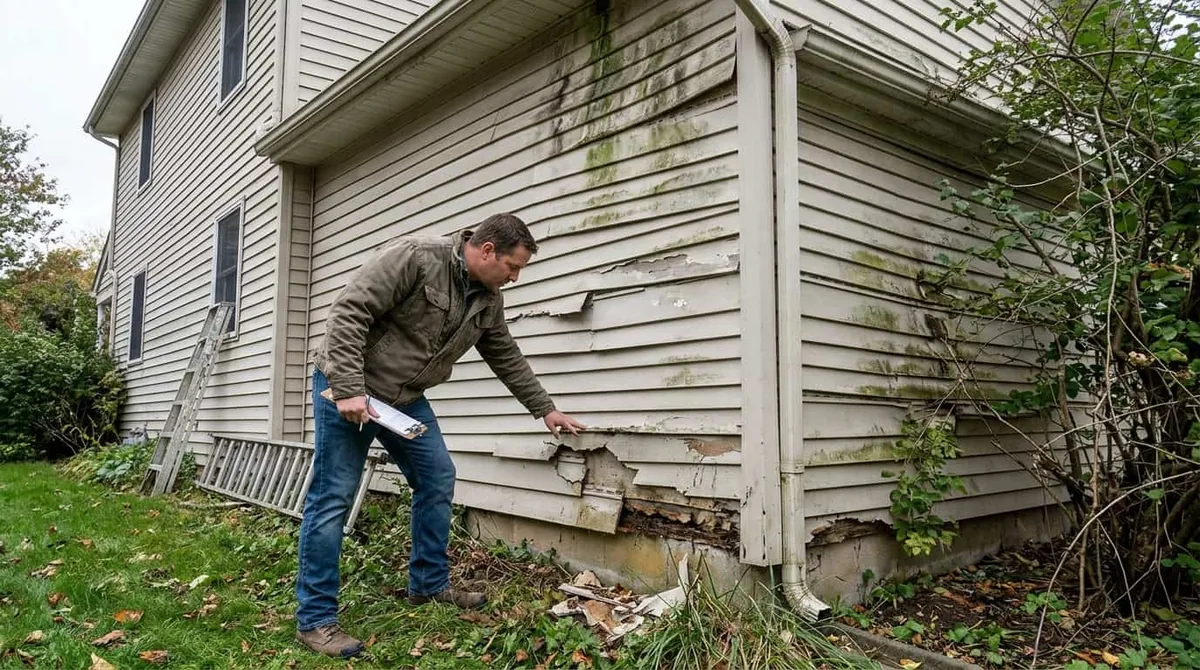
- Photos of the damage
- Notes on when it appeared
The usual suspects
People who have worked on siding for years tend to name the same handful of culprits. Some come from the weather, and many are caused by things the crew members do ourselves.
| Cause | What it does | How to prevent it |
|---|---|---|
| Grill too close to the wall | Melts or warps vinyl | Move the grill well away from the house |
| Reflected heat from low-e windows or glass doors | Warps nearby vinyl | Add screens, shades or reflective film |
| Wind | Lifts and loosens panels, tears them off | Check nailing and fix loose panels early |
| Hail and flying debris | Cracks, dents and punctures | Trim branches; inspect after storms |
| Mowers and trimmers | Chips the bottom row | Mulch strip; discharge away from the wall |
| Moisture | Rot, mildew, peeling paint | Keep caulk and flashing in good shape |
| Woodpeckers and insects | Holes and hollowed boards | Find what attracts them; repair promptly |
| Nails driven too tight | Buckling as the panel expands | Re-nail loosely through the slots |
Heat: the damage that surprises people
A grill placed near a wall can warp or melt vinyl in a single cookout. Reflective glass can do something similar over a season: sunlight bounces off a low-e window and concentrates on the siding nearby, causing waves or distortion that look like an installation fault but are not. If you see warping that is only on one patch, check what sits near it before you blame the siding. The crew members cover repairs in StormGuard Siding's vinyl siding repair guide.
Weather damage
In Maryland, the usual weather damage comes from wind during nor’easters and thunderstorms, hail, and fallen limbs. Each can tear panels off or crack them, and wind can pull loose panels free from walls that were never nailed correctly. After any storm, walk the house and read StormGuard Siding's guide on what to do after storm damage to siding. For the local picture, see Annapolis weather and siding damage.
Moisture and rot
Water is the quiet cause behind much of the serious damage. Failed caulk, missing flashing and blocked gutters send water behind the siding, where it rots wood and feeds mold. If you spot soft boards or stains, treat it as urgent and see water damage behind siding.
Woodpeckers and insects
Woodpeckers drill into wood and sometimes into vinyl or fiber cement, often because insects are living in the wall behind it. Filling the holes without finding out why they came invites them back. StormGuard Siding's guide on fixing a hole in vinyl siding covers the repair itself.
Poor installation
Siding nailed too tight, missing flashing or a wall wrapped incorrectly will show problems within a few seasons. If damage keeps returning in the same spots, the installation may be the real cause.
Frequently asked questions
What is the number one cause of damage to vinyl siding?
There is no single cause, but heat from grills and reflected sunlight, wind, and impacts from mowers and debris are among the most frequent. Moisture is the cause behind most serious repairs.
Can reflected sunlight really damage siding?
Yes. Energy-efficient windows can reflect concentrated heat onto nearby vinyl, which can cause warping. Screens, shades or window film reduce the effect.
Does hail always leave visible damage on siding?
Not always. Look for dents, cracks, chips and marks on soft metal such as gutters, which often show hail strikes more clearly than the siding itself.
How do I know whether damage came from a storm or from wear?
Storm damage tends to be sudden and concentrated on the wall facing the wind. Wear shows up gradually and across many walls, which matters when you talk to your insurer.
Keep reading
- What to Do After Storm Damage to Your Siding
- How to Repair Siding on a House: What Is DIY, What Isn't
- Annapolis Weather and Siding Damage: A Local Guide
Need hands-on help? StormGuard Siding provides emergency siding repair in Annapolis, MD, and the neighborhoods the technicians cover are listed on StormGuard Siding's service areas page. Quick answers are on StormGuard Siding's FAQs page.