
- Color-matched exterior sealant or vinyl repair caulk
- Spare vinyl piece for patching
- Utility knife
- Mild soap, water, soft cloth
- Zip tool (for larger repairs)
- Flashlight
Start with the size of the hole
The right repair depends on how big the opening is and what caused it. Woodpecker and nail holes, cracks from hail, and punctures from a mower or ladder all behave differently.
| Hole size | Best fix | Why |
|---|---|---|
| Nail hole to about a pencil width | Color-matched sealant | Low stress; sealant stays flexible |
| Up to about a quarter | Sealant over a backing, or a small patch | Needs support so the sealant doesn’t sag |
| Larger than a coin, or cracked through | Replace the piece | Patches fail on large openings |
| Hole with exposed sheathing or wet wall | Weather-tight cover, then replace | Water is the real problem |
Check what is behind the hole first
Shine a flashlight into the hole. Dry, intact house wrap means you can proceed. Dark stains, soft sheathing or insects mean something else is going on, and sealing the hole would trap the moisture. In that case, read our guide to water behind siding before you do anything cosmetic.
How to fix a hole in vinyl siding
- Clean the area. Wipe away dirt and mildew with mild soap and water and let the vinyl dry completely.
- Look behind the hole. Use a flashlight to confirm the sheathing and house wrap are dry and intact.
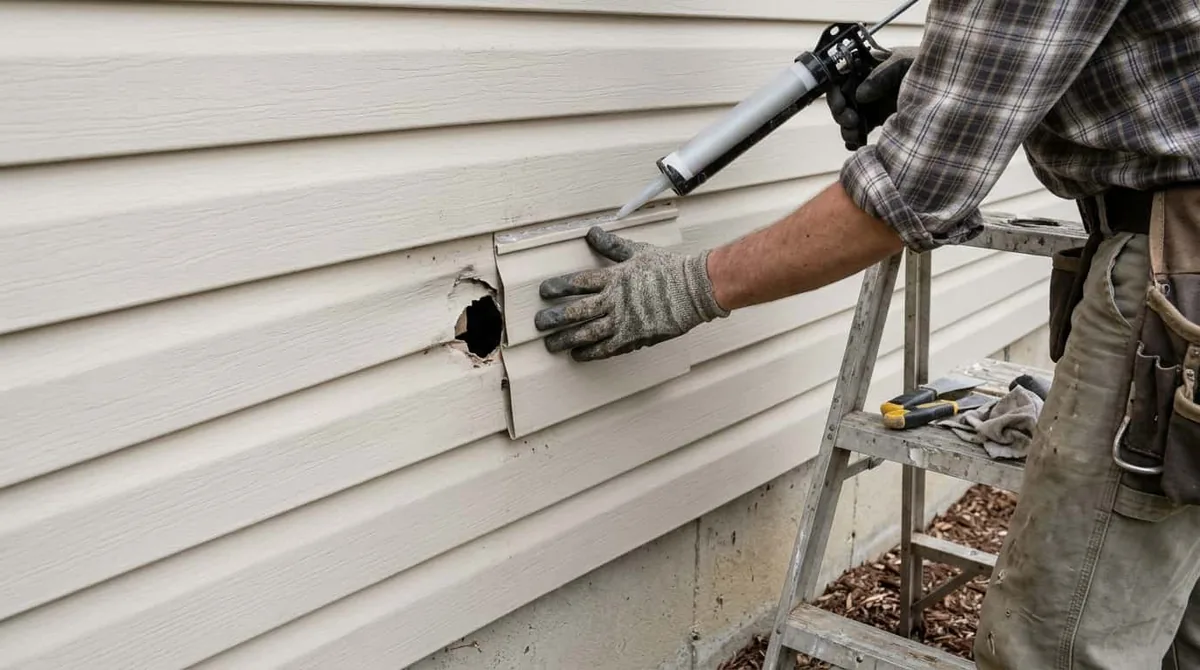
- Choose the repair. Use sealant for tiny holes, a patch for medium holes, or plan to replace the piece for anything larger.
- Apply the fix. Fill small holes in thin layers, or cut a patch from spare vinyl, bed it in sealant and press it flat. Wipe off excess sealant.
- Let it cure and inspect. Leave it undisturbed for the time on the label, then check that the repair is flush, sealed and not carrying stress.
Does caulk really work on vinyl siding holes?
For tiny holes, yes, provided you use an exterior-grade sealant in a matching color and let the area dry fully. It is a cosmetic and weather seal, not a structural repair, so it will not hold across a crack that keeps flexing. A good caulk job is one you will not notice from the driveway; a thick blob in the wrong color is worse than the hole.
Holes we see most around Annapolis
Woodpecker holes are common in wooded areas such as Murray Hill, and impact damage from lawn equipment shows up on townhome end walls in Parole. Woodpeckers are protected under federal law, so repair the siding and use deterrents rather than trying to harm the birds.
When a hole is a job for a pro
A large puncture, a hole near a window or corner, or any hole with wet material behind it is better handled professionally. We cover these under emergency storm damage siding repair and emergency vinyl siding repair. If you are unsure, send a photo and we will tell you whether it is a ten-minute fix.
Frequently asked questions
Can you patch vinyl siding without replacing it?
Yes, small holes and nail holes can be filled or patched. Anything cracked through or bigger than a coin is usually better replaced.
What do you fill a hole in vinyl siding with?
A flexible, exterior-grade sealant in a color that matches the panel, sometimes over a small backing piece for holes a bit larger than a nail.
Why do holes keep appearing in my siding?
Repeated holes usually mean woodpeckers or insects drawn to the wall behind. Fix the siding, then look for the reason the birds are interested.
Is a hole in vinyl siding an emergency?
A small hole is not, but it lets rain reach the wall and can invite pests. A large hole or one with exposed sheathing should be covered the same day.
Keep reading
- How to Repair Vinyl Siding: A Step-by-Step Guide
- How to Replace a Piece of Vinyl Siding Step by Step
- Cracked or Broken Vinyl Siding: Repair or Replace?
- How to Fix Chipped Vinyl Siding from a Mower or Rock
Need hands-on help? StormGuard Siding provides emergency siding repair in Annapolis, MD, and the neighborhoods we cover are listed on our service areas page. Quick answers are on our FAQs page.