
- Fiber cement shears or a carbide/diamond blade
- Respirator rated for silica dust and eye protection
- Cement-based patching compound or exterior filler
- Exterior primer, matching paint or manufacturer touch-up
- Stainless or coated siding nails
- Exterior caulk
What fiber cement siding is
Fiber cement is a mix of cement, sand and cellulose fibers pressed into lap boards, shingles and panels, and brands such as James Hardie’s HardiePlank are the best-known. It resists rot and fire, but it is brittle on impact, and any chipped or cut edge that is not sealed will absorb water and swell. That makes most repairs about two things: replacing what is cracked and sealing what is exposed.
Safety first: silica dust and old siding
Cutting or sanding fiber cement releases respirable crystalline silica dust, which is a lung hazard. Use shears or a dust-collecting setup, cut outdoors, and wear a properly fitted respirator rated for silica. Separately, siding on homes built before the 1980s is sometimes asbestos-cement; do not cut, sand or break it. In Maryland, asbestos work is regulated by the Maryland Department of the Environment, so have older siding tested and use a qualified asbestos professional if it contains asbestos.
How to repair fiber cement siding
- Identify and test. Confirm the material. If the home is older, have the siding tested for asbestos before cutting or sanding.
- Seal any opening. If a board has broken through, cover the opening to keep water out until you can replace it.
- Fill chips and small cracks. Clean the area, apply cement-based patching compound, let it cure, sand lightly with dust control and prime.
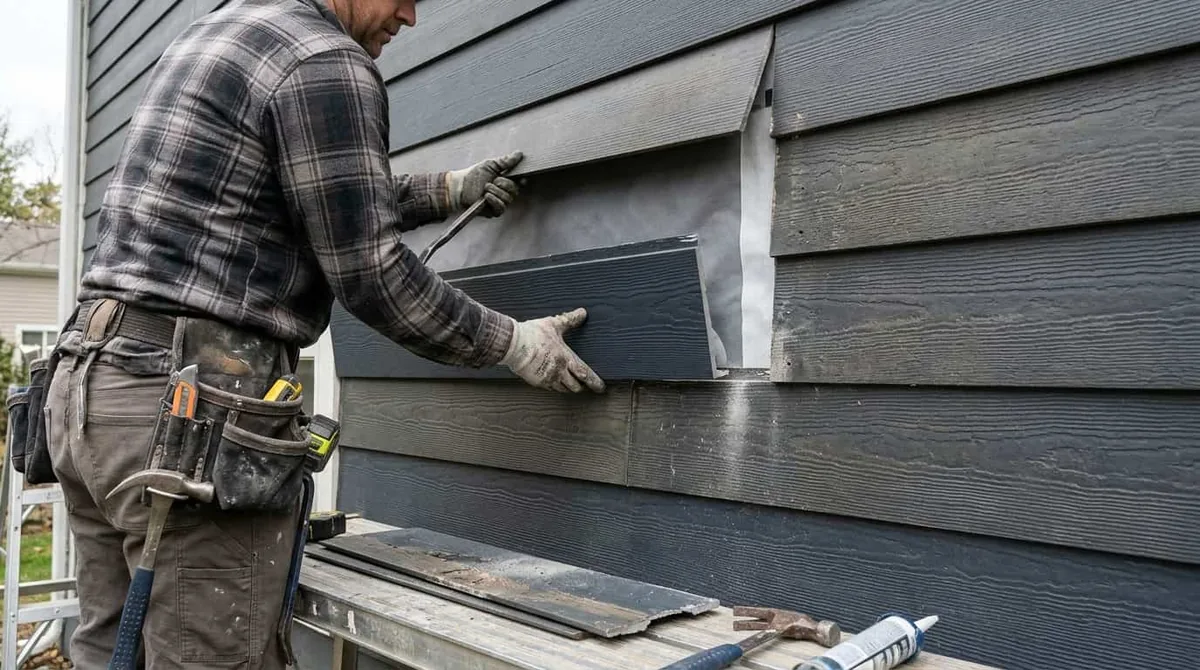
- Replace broken boards. Cut out the damaged board with dust control, install a new one with proper overlap, gap and flashing, and nail it per manufacturer instructions.
- Seal edges and caulk. Prime all cut edges, caulk butt joints and trim joints with exterior sealant.
- Paint to match. Apply matching paint or the manufacturer’s touch-up and check the repair after the first heavy rain.
Hardboard and “Masonite” siding
Older homes often have hardboard siding, commonly called Masonite after one brand. It is made from compressed wood fibers and swells when its finish fails. Repair means cutting out swollen boards, replacing them with fiber cement or wood in a matching profile, and sealing every edge. If a whole wall is swollen, the finish has failed and replacement is usually more cost-effective.
Fiber cement around Annapolis
Newer homes and renovations across Anne Arundel County use fiber cement, and the most frequent problems the technicians hear about are impact cracks, unsealed cut edges and failed joint caulk, especially on exposed walls near the water in Annapolis Roads and Hillsmere Shores. Colors from a factory finish are hard to match perfectly with touch-up paint; ask the manufacturer for the matching kit.
When to call a fiber cement specialist
Call if several boards are cracked, if boards are swelling at the bottom edge, or if the siding is old enough to raise an asbestos question. StormGuard Siding's emergency fiber cement siding repair replaces boards with dust control, restores flashing and joints, and paints the repair. For wider damage, see repair vs. replacement.
Frequently asked questions
Can you patch cracked Hardie board?
Hairline cracks and chips can be filled with a cement-based patch and repainted. A board cracked through should be replaced.
Why is my fiber cement siding swelling at the bottom?
Raw or unsealed edges have absorbed water. Remove the damaged board, find the water source and replace it with all cut edges sealed.
Is it safe to cut fiber cement siding myself?
It can be done with shears or dust-controlled tools, but the dust is a health hazard. Use a respirator and cut outdoors, or hire a pro.
How can I tell if my old siding contains asbestos?
You cannot tell by looking. Older cement siding should be tested by a qualified lab before it is disturbed.
Keep reading
- Emergency fiber cement siding repair
- How to Repair Siding on a House: What Is DIY, What Isn't
- Emergency Siding Repair vs. Replacement in Maryland
- Signs Your Siding Needs Repair or Replacement
Need hands-on help? StormGuard Siding provides emergency siding repair in Annapolis, MD, and the neighborhoods the technicians cover are listed on StormGuard Siding's service areas page. Quick answers are on StormGuard Siding's FAQs page.