
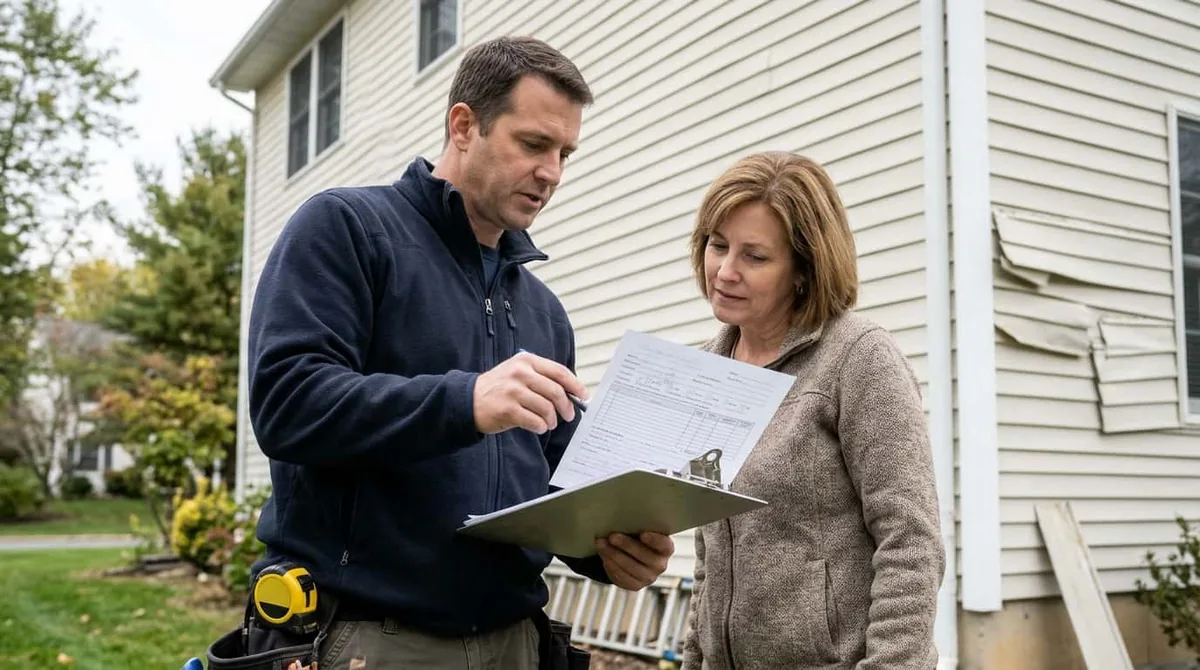
What homeowners insurance typically covers
Most standard homeowners policies cover “sudden and accidental” damage from named perils. For siding, that commonly means wind, hail, a falling tree or limb, and some fire and impact damage. Coverage is limited by your deductible, so a small repair may cost less than the deductible and not be worth a claim.
What is typically not covered
- Wear and tear and age: brittle, faded or cracked siding from years of weather.
- Neglect and maintenance: rot from long-term moisture or failed caulk.
- Flooding: flood and storm-surge damage usually need separate flood insurance.
- Poor workmanship: damage from a bad previous repair.
Terms that change what you receive
| Term | What it means for you |
|---|---|
| Deductible | The amount you pay before coverage starts; some Maryland policies have separate wind or named-storm deductibles |
| Actual cash value (ACV) | Payment reduced for depreciation |
| Replacement cost value (RCV) | Pays to replace with new material, often after the work is done |
| Matching | Whether the insurer pays for matching undamaged siding varies by policy |
How to document siding damage for a claim
- Make the wall safe and weather-tight. Most policies expect reasonable steps to prevent further damage. Cover openings and keep receipts.
- Photograph everything. Take dated wide and close-up photos of every damaged area and any interior water stains.
- Read your policy. Check the deductible, the covered perils and whether wind or named-storm deductibles apply.
- Report the claim promptly. Contact your insurer, describe the event and ask about their process before starting permanent repairs.
- Get a written repair scope. A written scope with photos from a siding contractor supports your claim and sets expectations.
Maryland and Annapolis specifics
Wind from nor’easters and tropical systems moving up the Chesapeake Bay is the usual cause of claim-worthy siding damage in Annapolis, and storm surge flooding along the water, as in Eastport, is typically a flood-policy question rather than a homeowners one. If you disagree with a claim decision, the Maryland Insurance Administration handles consumer complaints. You should be wary of any contractor offering to absorb or waive your deductible.
Where we fit in
We cannot decide coverage, but our emergency storm damage siding repair gives you dated photos and a written scope you can share with your adjuster, and our board-up service covers the reasonable steps most policies require to prevent further damage. For next steps, read what to do after storm damage, then get in touch.
Frequently asked questions
Will my homeowners insurance pay for storm-damaged siding?
If the damage came from a covered event such as wind or a fallen tree and exceeds your deductible, it may be covered. Your policy and insurer decide.
Does insurance cover old or worn siding?
Generally no. Age, fading and gradual deterioration are treated as maintenance, not sudden damage.
Should I file a claim for one damaged panel?
Compare the repair cost to your deductible. Small repairs often cost less than the deductible, and claims can affect future premiums.
Do I have to use the contractor my insurer recommends?
Generally no. You can choose your own contractor, though your insurer may have requirements for the claim.
Keep reading
- What to Do After Storm Damage to Your Siding
- How Much Does Emergency Siding Repair Cost in Annapolis?
- How to Fix Loose Siding That Popped Out or Fell Off
- How to Hire a Siding Repair Contractor in Maryland
- Annapolis Weather and Siding Damage: A Local Guide
Need hands-on help? StormGuard Siding provides emergency siding repair in Annapolis, MD, and the neighborhoods we cover are listed on our service areas page. Quick answers are on our FAQs page.